

.svg)

Distilled Spirits Council CEO Testifies on Whiskey Tariffs
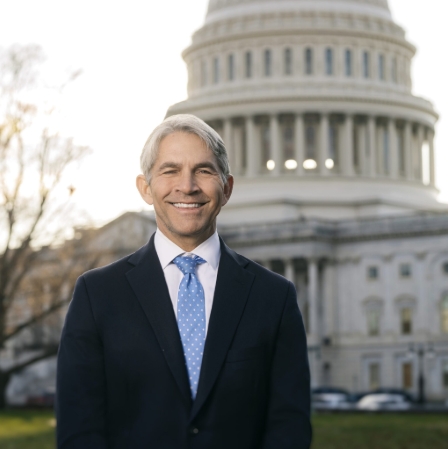
Distilled Spirits Council of the United States (DISCUS) President and CEO Chris Swonger testified before the Section 301 Committee, an interagency body under the Office of the United States Trade Representative (USTR), highlighting the importance of exempting distilled spirits from current and future tariffs to safeguard the U.S. hospitality sector, boost American jobs and support U.S. export growth.
Swonger (pictured), who testified as part of the Section 301 investigation into trade deficits, opened his remarks by expressing support for President Trump’s goal to increase U.S. manufacturing and exports.
He applauded the administration’s efforts to reduce tariffs on U.S. spirits in several markets including India, Argentina, Cambodia, Ecuador, Indonesia, Malaysia, Turkey, Switzerland and Taiwan. Swonger also expressed the U.S. spirits industry’s deep appreciation for President Trump’s recent decision to lift the 10% tariff on whiskeys from the UK, including Scotch Whisky, adding that this is a victory for American hospitality businesses including restaurants, bars and retailers.
“America’s spirits industry is a powerful economic engine,” Swonger, noting that the sector generates more than $250 billion in economic activity, supports approximately 1.7 million U.S. jobs and sources more than 2.7 billion pounds of grains from American farmers, said in a news release. “But the U.S. spirits and hospitality sectors are facing significant economic headwinds. A slowdown in the spirits market, combined with ongoing trade frictions, has started to result in year-over-year job losses at U.S. distilleries.”
Swonger shared with the committee recent statistics underscoring the hardships facing the U.S spirits and hospitality sectors. He stated that domestic spirits sales declined 2.2% in 2025, the first decline in decades; exports fell nearly 4%; and U.S. distilleries lost 3.5% of their workforce, nearly 1,000 jobs from September 2024 to September 2025. He also pointed out that restaurants and bars, which are critical to local economies and employment, continue to face rising costs and closures.
“In this environment, tariffs on imported spirits place additional strain on the sector,” Swonger said. “Alcohol sales are particularly consequential for restaurant profitability, accounting for 21% of the total revenue for full-service restaurants. This underscores the outsized role these products play in sustaining the broader hospitality sector.”
Swonger emphasized that the U.S. spirits trade deficit is driven by consumer choice, not unfair trade practices, and raised concern that tariffs on spirits are likely to trigger retaliation that disproportionately harms American distillers and hospitality workers.
He pointed out that when the European Union imposed retaliatory tariffs on American Whiskey from 2018 to 2021, U.S. exports fell 20%, before rebounding 60% after the tariffs were suspended. More recently, retaliatory bans in Canada led to a 63% decline in U.S. spirits exports to that market in 2025.
“Even the threat of tariffs creates uncertainty, negatively impacting exports,” Swonger said, noting that the EU’s suspension of planned retaliatory tariffs on U.S. spirits, set to expire in August 2026, had contributed to a 3% decline in U.S. spirits exports to the EU.
Swonger highlighted the unique nature of the global spirits marketplace, where certain products, including Scotch Whisky, Cognac, Irish Whisky and Tequila, are geographically distinctive products that cannot be produced in the United States. In return, the U.S. has secured recognition of Bourbon and Tennessee Whiskey as distinctive products in 45 countries, helping protect the authenticity, quality and consumer trust in these iconic American spirits.
In concluding his testimony, Swonger urged the administration to exempt distilled spirits from any current or future tariffs; preserve open markets such as the EU and UK; swiftly implement recently secured trade agreements; and pursue new agreements in priority export markets.
“These steps will support the administration’s goals of increasing U.S. exports and creating good-paying American jobs across the hospitality sector,” Swonger said.
Read the Full Testimony of DISCUS President and CEO Chris Swonger
Read more: Distilled Spirits Council Receives $900k Grant from USDA
About DISCUS
The Distilled Spirits Council of the United States (DISCUS) represents the leading producers and marketers of distilled spirits and is the leading voice and advocate for distilled spirits in the United States. DISCUS advocates on legislative, regulatory and public affairs issues impacting the distilled spirits sector at the local, state, federal and international levels; promotes the distilled spirits sector, raising awareness and opening markets in the United States and around the globe; and encourages responsible and moderate consumption of distilled spirits as part of an enjoyable adult lifestyle based on evidence-based research and policy. For more information, please visit: https://www.responsibility.org/.